
Table of Contents
Introduction
When you visit a villa for the first time, it’s usually the house itself that gets your attention. You notice the spacious living room, the bedrooms, the garden and maybe the clubhouse. If the location works for your family and the price fits your budget, the property starts to feel like a serious option.
But there’s something many people don’t think about until much later: the water supply.
It’s easy to overlook because water isn’t something you can judge from a beautiful model villa or a brochure. You need it every single day, though, and an unreliable supply can make even a well-designed home difficult to live in.
That’s why water supply in Sarjapur Road villas is worth understanding before you make a purchase.
Sarjapur Road covers a large residential corridor, and every neighbourhood doesn’t have the same infrastructure. One community might depend on borewells, another might use tanker deliveries, while a third could have a combination of sources.
Knowing how a property gets its water can save you from unexpected expenses and inconvenience after moving in.
Why Does Water Supply Matter When Buying a Villa?
Think about how much water a family uses in an ordinary day.
There’s water for cooking, bathing, washing clothes, cleaning and other household needs. If your villa has a garden, that adds another requirement. In a gated community, water is also needed to maintain landscaped areas and shared facilities.
The question isn’t simply whether water comes out of the tap during your site visit. It’s whether the supply remains dependable when the weather changes, more families move into the community or demand increases.
For example, a newly launched villa project may initially have only a small number of occupied homes. The available water might seem more than enough at that stage.
Things can be different once most of the villas are occupied.
Before choosing a home, it helps to understand the community’s expected water demand, existing supply and plans for managing shortages.
If you’re still exploring different neighbourhoods, you can compare villas in Sarjapur Road based on their locations, configurations and residential features. Once you’ve shortlisted a few properties, water infrastructure should become part of your comparison.
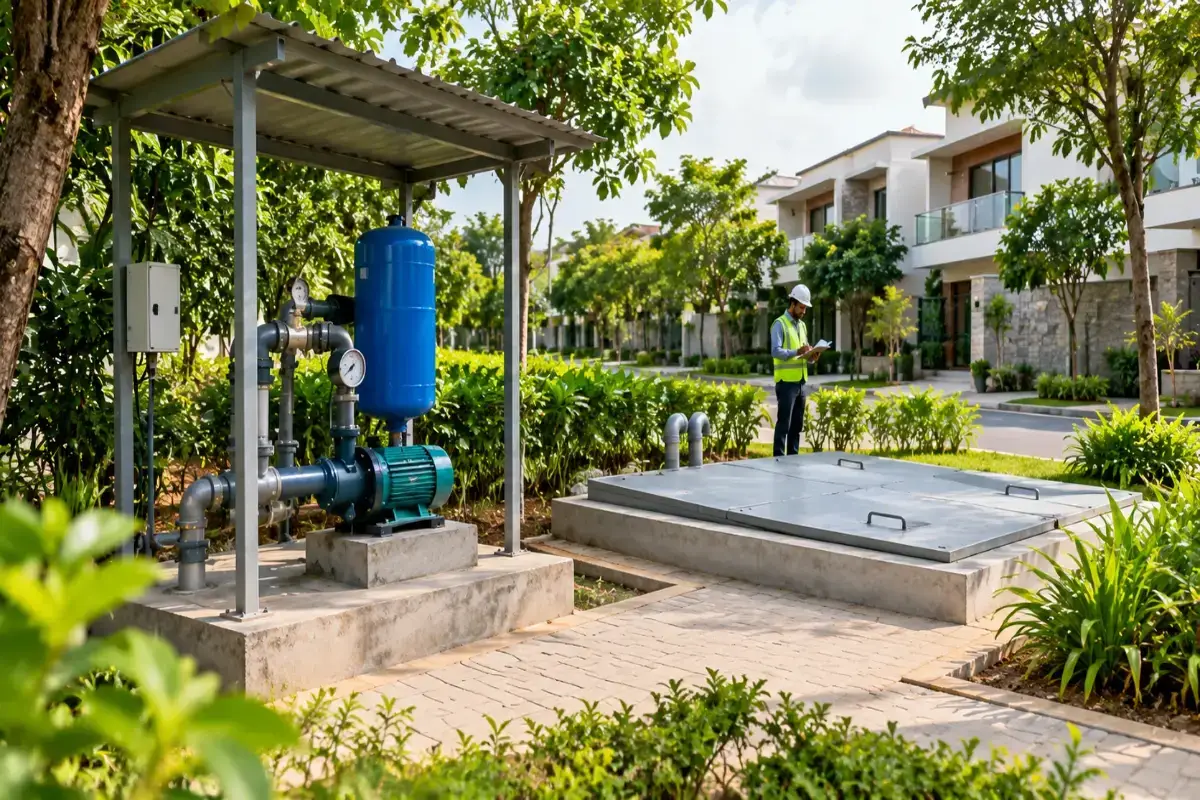
Where Do Villas in Sarjapur Road Get Their Water?
There’s no single answer to this question.
Water availability can vary even between residential projects located relatively close to one another. It depends on the local infrastructure, groundwater conditions and arrangements made by the developer or residents’ association.
Here are the main sources you may come across while looking at villas.
Borewell Water
Borewells are one of the water sources used by residential properties in different parts of Bangalore.
A borewell draws water from underground. Depending on the development, the water may be stored in a common tank and distributed to individual homes.
However, having a borewell doesn’t automatically mean a project has enough water throughout the year.
Groundwater availability can change, particularly during dry periods. The condition of the borewell, the amount of water being extracted and local recharge also matter.
Some communities have more than one borewell, while others depend on a combination of borewells and backup supplies.
Water Tankers
Water tankers are another option used by residential properties.
For some communities, tankers provide additional water when the regular supply isn’t sufficient. Others may depend on deliveries more frequently.
This isn’t necessarily a problem by itself. What matters is how reliable the arrangement is and how much it costs.
A community purchasing tanker water regularly may have higher operating expenses than buyers initially expect.
Before buying, ask whether tanker charges are included in maintenance fees or collected separately.
Piped Water Supply
Some residential developments may have access to an approved piped water connection.
However, buyers should be careful about the difference between an existing connection and one that has merely been proposed.
If a salesperson mentions that piped water will be available in the future, ask whether there is an official approval or connection document.
It’s better to understand what is available today rather than make a purchase decision based only on an expected improvement.
Borewell Water in Sarjapur Road: Is It Reliable?
One question that comes up during property enquiries is whether borewell water in Sarjapur Road can support a residential community throughout the year.
The answer depends on the particular property.
Groundwater conditions aren’t identical across the entire corridor. Even nearby plots can have different borewell performance.
Instead of assuming that a particular neighbourhood has good or bad groundwater, try to find out how the specific project manages its supply.
For an occupied villa community, the residents’ association may be able to share more useful information than a sales brochure.
Ask whether the borewell has operated consistently, whether extra tankers were needed during summer and whether there have been any major interruptions.
You should also ask about water quality.
Groundwater can contain naturally occurring minerals and other substances. A water-quality test helps determine whether treatment is required for particular uses.
If drinking water comes from the community supply, find out how it’s treated and tested. If residents use separate drinking-water systems, understand how those are maintained.
For example, if you’re considering NVT Whispering Hues, include water sourcing, storage capacity and backup supply in your questions during the project enquiry.
These are sensible questions for any developing villa community, not an indication that this particular project has a known water issue.
What Water Problems Can Villa Owners Face?
Every property has its own circumstances, so it wouldn’t be fair to say that all communities along Sarjapur Road experience the same problems.
Still, there are a few situations worth thinking about.
Water Shortages During Summer
During dry months, a community that depends heavily on groundwater may find its available supply changing.
If the existing source isn’t enough, management might have to arrange additional deliveries.
For residents, this can mean closer monitoring of water consumption or additional costs.
The useful thing to ask is whether the community has faced such a situation before and what it did to manage it.
Higher Maintenance Expenses
When you compare two villas, you might focus on the sale price and forget about the monthly cost of living there.
Water can be part of those ongoing expenses.
If the community regularly purchases tanker water or operates treatment and pumping equipment, the cost may be reflected in maintenance charges.
A slightly lower property price doesn’t always mean lower long-term expenses.
Ask for a maintenance estimate if the community is new. For an occupied development, request recent maintenance statements where possible.
Water Quality and Treatment
Sometimes the concern isn’t how much water is available, but whether it’s suitable for household use.
Hard water, for instance, may create scaling on taps, bathroom fittings and appliances. Other water-quality concerns may require different treatment.
The right solution depends on testing.
Rather than relying on appearance, taste or a general assurance from the sales team, ask for a recent laboratory report.
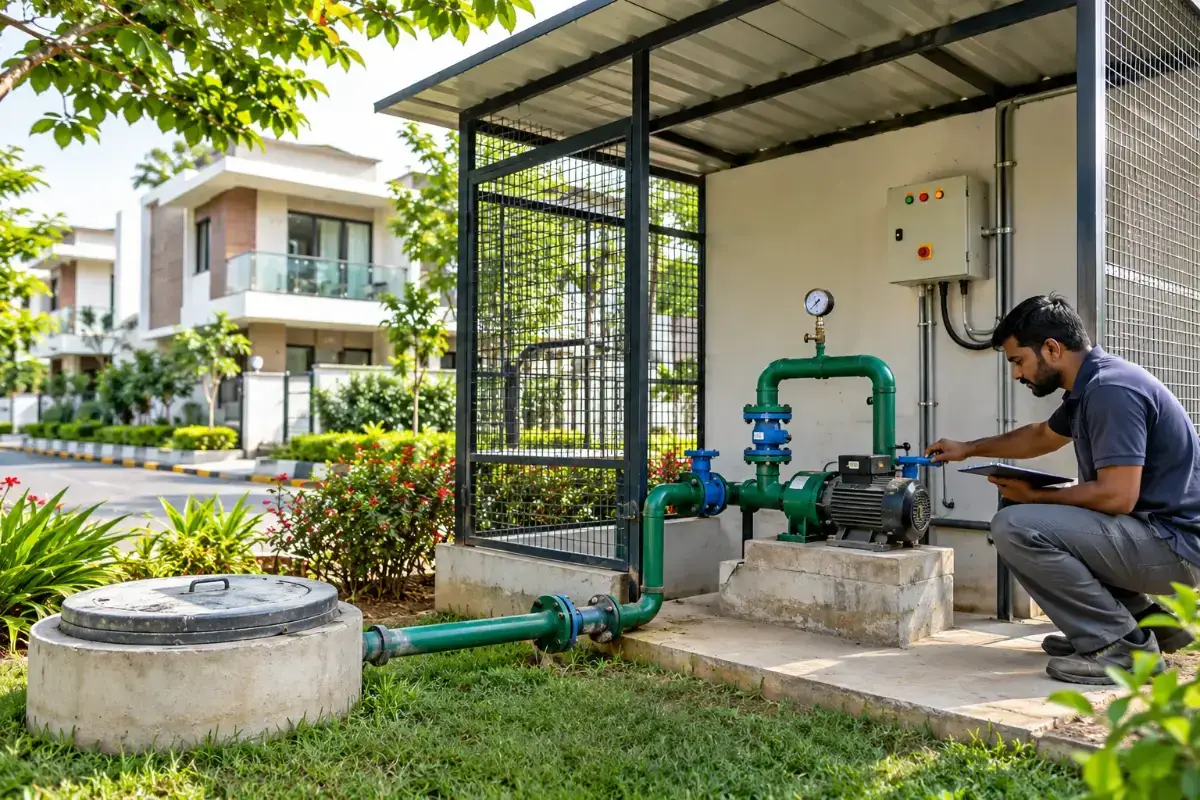
Problems With Storage and Distribution
A community may have a reasonable water source but still face interruptions because of pump failures, insufficient storage or poor maintenance.
These are the kinds of issues that don’t always come up during a sales presentation.
If you’re visiting an occupied community, talking to residents can give you a better understanding of how the system works day to day.
How Can You Identify Water Problems Before Buying?
The best way to investigate water problems in Sarjapur Road villas is to ask specific questions about the property you’re considering.
Start with something simple: “What is the main water source for this community?”
Let the salesperson explain the setup. Then ask what happens if that source isn’t sufficient.
You don’t need to turn the visit into a technical inspection, but you should come away knowing whether the project uses borewells, tankers, a piped connection or a combination of sources.
If the community is already occupied, try speaking with a resident.
You could ask:
Is the water supply generally consistent throughout the year?
Are tankers used regularly?
Have water-related maintenance charges increased?
Is the water tested and treated?
How quickly are supply problems resolved?
For an under-construction project, the questions will be slightly different.
Ask which systems have already been installed, whether water-storage facilities are completed and who will operate the infrastructure after possession.
Most importantly, request important commitments in writing.
Does Rainwater Harvesting Make a Difference?
Rainwater harvesting is often mentioned in residential project brochures, and it can be a useful part of a community’s water-management plan.
The idea is straightforward. Instead of allowing all rainwater to flow away, the development provides systems to collect it, store it for suitable uses or support groundwater recharge.
In a villa community, rooftop collection systems and recharge facilities may form part of the overall design.
But there is a difference between having rainwater-harvesting features in the approved plan and having a properly maintained system that works.
Ask how the system operates and who looks after it.
For instance, when researching NVT A Wonderful World along Sarjapur–Attibele Road, you can ask for details of the project’s planned water-management infrastructure.
Review the available project documents rather than assuming that features such as rainwater harvesting or wastewater treatment are operational.
Rainwater harvesting can help conserve water, but it isn’t a guarantee that a property will never experience a shortage.
Water Supply in Independent Villas vs High-Rise Residences
Not every property marketed to villa buyers is the same type of home.
An independent villa generally provides a separate residence within its plot or community, while a high-rise residential development has multiple homes within larger buildings.
Both need reliable water infrastructure, but the way water is stored and distributed can be different.
In a villa community, the management may operate common storage tanks and distribute water through the internal network.
In a high-rise building, water has to reach homes on several floors, which makes the pumping and distribution arrangements particularly important.
Consider NVT Sky Villas, a villa-inspired high-rise residential development.
If you’re comparing such residences with independent villas, look beyond the floor plan. Ask how the building stores water, how pumping systems are maintained and what backup arrangements exist during interruptions.
There isn’t a universal winner when it comes to water supply. A well-managed system matters more than the label attached to the property.
Are Water Conditions the Same Across East Bangalore?
Bangalore has many developing residential neighbourhoods, but their infrastructure and water arrangements can be quite different.
A villa near Gunjur may not have the same supply arrangements as a property near Dommasandra or Budigere Cross.
Even within one locality, two communities might depend on different sources.
This becomes especially relevant when you’re comparing projects across East Bangalore rather than focusing only on Sarjapur Road.
For example, NVT Under the Open Sky is located at Budigere Cross, not on Sarjapur Road.
Someone comparing this villa development with a project around Sarjapur–Attibele Road should investigate each location separately.
The right approach is to compare the actual facilities, water sources, maintenance costs and supporting documents instead of assuming that an entire area has the same water conditions.

What Should You Ask During a Villa Site Visit?
You don’t need to know every technical detail about water infrastructure, but a few practical questions can make a big difference.
Ask the sales representative to explain the water supply in plain language.
If the answer is that the project has borewells, find out whether they’re operational and whether recent yield information is available.
If tankers are part of the arrangement, ask how often they’re needed and who pays for them.
If the project promises a future piped connection, request the available approval or connection details.
It is also worth finding out how much water the community can store, whether treatment facilities are available and who will be responsible for maintenance.
For an occupied property, try to get an idea of actual monthly expenses.
Finally, don’t forget that water is only one part of the purchase decision. Legal documentation, RERA registration, construction quality, road access, total cost and possession conditions also need attention.
A comfortable home depends on all these practical details working together.
Frequently Asked Questions About Water Supply in Sarjapur Road Villas
No. The source of water depends on the individual development. Some communities use borewells, while others may have tanker arrangements, piped connections or a combination of sources.
Tanker water is used by some residential communities as a primary or additional supply. However, you should check the actual tanker dependence of the property rather than make assumptions based on its location.
Ask about the existing water sources, seasonal supply records, storage facilities and backup arrangements. If people already live in the community, their experience can offer additional insight.
That depends on the water quality and treatment. A qualified laboratory test is needed to assess whether it meets applicable drinking-water standards.
It can support water conservation and groundwater recharge, but its effectiveness depends on rainfall, design and maintenance. It shouldn’t be viewed as a guaranteed replacement for other supply sources.
Yes. Water-related expenses may be included in maintenance charges or collected separately. Understanding these costs helps you estimate the property’s ongoing expenses.
Conclusion
Choosing a villa isn’t only about finding a beautiful house. It’s about finding a home that works comfortably for your family, year after year.
Water supply is one of those everyday details that can make a real difference after you move in.
The good news is that you don’t need to be an expert to ask the right questions. Find out where the water comes from, how dependable the supply has been, what happens during shortages and how much the system costs to maintain.
If something isn’t clear, ask for a better explanation or supporting records before making a commitment.
A thoughtful purchase is one where you understand not just what you’re buying, but what everyday life in that home is likely to be like.